
-
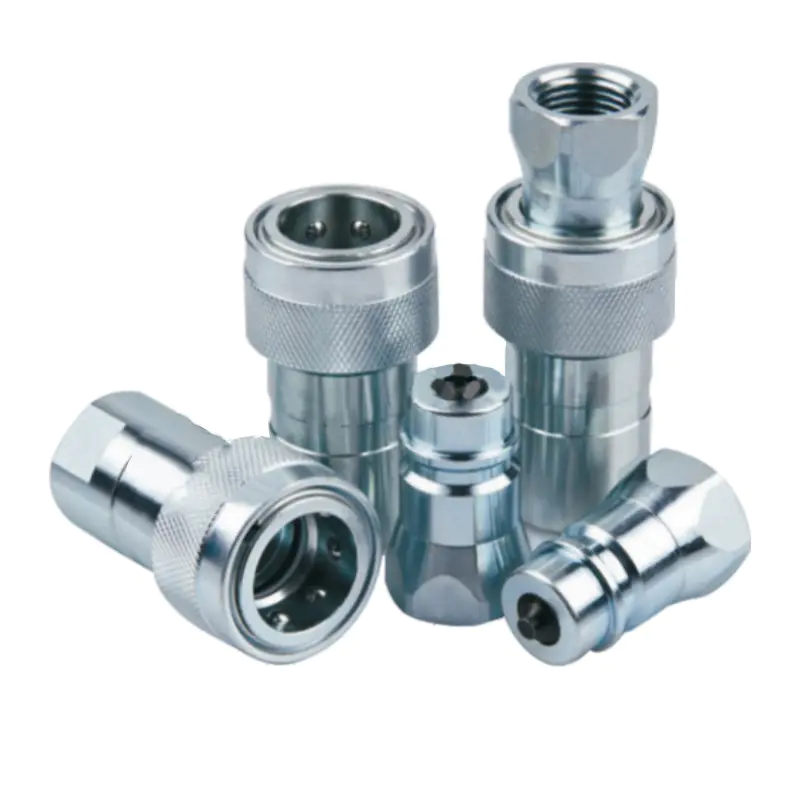
Sealing Mechanism Design and Leak Prevention: The sealing mechanism of Pneumatic Quick Coupling is one of the most critical design features influencing air leakage and system efficiency. High-quality couplings typically incorporate precision-engineered sealing elements such as O-rings, elastomeric seals, or flat-face seals that create a tight interface between the plug and socket. The effectiveness of these seals depends on factors such as material compatibility, compression force, and resistance to wear under repeated connection cycles. Poorly designed seals can result in micro-leakage, which leads to continuous air loss, increased compressor workload, and higher energy consumption. Advanced sealing designs minimize leakage by maintaining consistent contact pressure even under vibration, pressure fluctuations, or temperature changes. Proper seal geometry and material selection ensure long-term leak-tight performance, directly improving pneumatic system efficiency and reducing operational costs.
-
Internal Flow Path Geometry and Pressure Drop: The internal flow path design of a Pneumatic Quick Coupling significantly affects airflow characteristics and pressure loss within the pneumatic system. Couplings with streamlined internal passages, smooth surface finishes, and optimized cross-sectional areas allow compressed air to flow with minimal turbulence and resistance. Conversely, poorly designed flow paths with sharp edges, abrupt diameter changes, or restricted openings can create pressure drops and energy losses. Excessive pressure drop reduces the effective air pressure delivered to pneumatic tools or actuators, requiring higher compressor output to maintain system performance. Efficient flow path design improves energy utilization, enhances system responsiveness, and reduces overall power consumption. Therefore, the internal geometry of a Pneumatic Quick Coupling plays a direct role in maintaining stable airflow and maximizing system efficiency.
-
Connection Interface Precision and Tolerance Control: The dimensional accuracy and machining tolerances of the connection interface in a Pneumatic Quick Coupling directly influence air leakage and operational efficiency. Precision manufacturing ensures proper alignment between the mating components, allowing seals to function effectively and preventing gaps that could lead to leakage. Tight tolerances also reduce mechanical play between components, minimizing wear and maintaining consistent sealing performance over time. In contrast, loose tolerances or poor surface finishes can result in imperfect sealing contact, vibration-induced leakage, and accelerated component degradation. High-precision designs enhance reliability, reduce maintenance requirements, and maintain system pressure stability, all of which contribute to improved pneumatic system efficiency.
-
Valve Design and Air Shut-Off Capability: Many Pneumatic Quick Couplings incorporate internal valves that automatically shut off airflow when the coupling is disconnected. The design of these valves greatly affects both air leakage prevention and system efficiency. High-performance valve mechanisms provide rapid and secure shut-off, preventing unnecessary air loss during connection or disconnection. Efficient valve sealing also ensures minimal leakage when the coupling is engaged. Poor valve design, however, may allow residual air escape or create flow restrictions that reduce system performance. Additionally, valve response time and sealing reliability influence system safety and operational continuity. Properly engineered valve systems improve energy efficiency by conserving compressed air and maintaining stable operating pressure throughout the pneumatic network.
-
Material Selection and Surface Treatment: The materials used in the construction of a Pneumatic Quick Coupling, along with surface treatments applied to internal components, influence leakage performance and long-term efficiency. Materials with high wear resistance, corrosion resistance, and dimensional stability maintain sealing integrity over extended periods of use. Surface treatments such as anodizing, plating, or polishing improve surface smoothness, reduce friction, and enhance sealing performance. Inferior materials may deform under pressure, corrode in harsh environments, or experience premature wear, leading to leakage and reduced system efficiency. Proper material selection ensures that the coupling maintains structural integrity, supports reliable sealing, and sustains consistent performance under varying environmental and operating conditions.
Industrial Blog
How does the design of a Pneumatic Quick Coupling impact air leakage and overall pneumatic system efficiency?
28
Mar
Mar
