
-
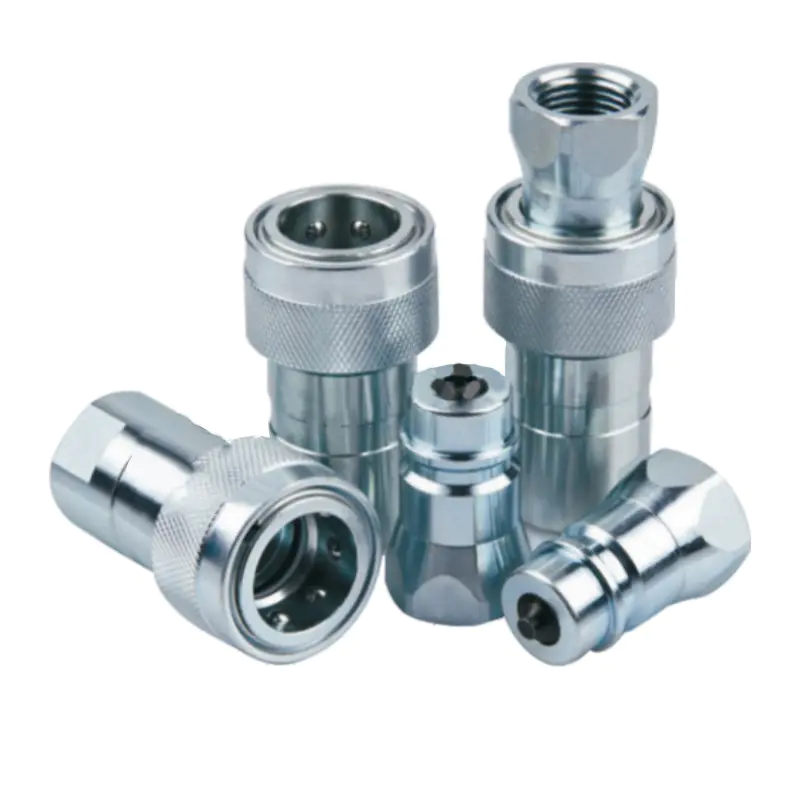
1. Influence of internal geometry on pressure drop: The internal configuration of a hydraulic quick coupling is a primary determinant of pressure loss in a hydraulic system. Constrictions, abrupt changes in diameter, or sharp edges inside the coupling create localized friction and energy dissipation, resulting in a measurable pressure drop across the component. High-pressure drops reduce the effective hydraulic pressure delivered to actuators, limiting force output, reducing system responsiveness, and potentially causing inconsistent operation in high-demand applications such as mobile machinery or industrial presses. To minimize these effects, modern couplings are designed with smooth, gradually tapered internal passages and optimally sized orifices that match the system’s rated flow and pressure requirements. This design approach ensures minimal hydraulic resistance while maintaining structural integrity and sealing effectiveness under operating pressure.
-
2. Effect of flow turbulence on performance: Turbulence arises when hydraulic fluid encounters sudden directional changes, sharp internal corners, or uneven surface finishes within the hydraulic quick coupling. Turbulent flow increases energy dissipation, generates additional heat, and accelerates wear on seals and mating surfaces. Over time, these factors can contribute to premature component degradation, fluid cavitation, and efficiency loss in the entire hydraulic circuit. Engineering solutions, such as streamlined internal channels, rounded edges at valve seats, and precise machining tolerances, help maintain laminar or controlled transitional flow, significantly reducing turbulence. By controlling turbulence, the coupling not only preserves energy efficiency but also minimizes vibration and noise, which is particularly important in sensitive equipment or environments where operational stability is critical.
-
3. Contribution to overall system efficiency: The cumulative effect of pressure drop and turbulence directly impacts the hydraulic system’s efficiency. An optimally designed hydraulic quick coupling reduces frictional losses, maintaining higher fluid pressure and flow to downstream components without additional pumping power. Lower turbulence and smoother flow paths reduce the generation of heat, preventing thermal degradation of hydraulic fluid and minimizing viscosity fluctuations, which can affect actuator speed and accuracy. Furthermore, efficient internal flow reduces the risk of cavitation and erosion within the coupling and the connected system, enhancing the reliability and lifespan of pumps, valves, and other hydraulic components. Ultimately, these design considerations allow the system to perform more predictably and with less energy consumption.
-
4. Role of valves and internal components: Many hydraulic quick couplings incorporate internal check valves to prevent fluid loss during disconnection and maintain system integrity under pressure. The design, placement, and responsiveness of these valves significantly influence internal flow patterns. Poorly aligned or oversized check valves can introduce localized turbulence, additional pressure drop, and transient flow irregularities when the coupling engages or disengages. Optimally designed valve geometry ensures rapid fluid transfer, minimal resistance, and consistent sealing while avoiding abrupt pressure spikes that could compromise system stability.
-
5. Material and surface finish considerations: The internal surface finish of a hydraulic quick coupling has a direct impact on flow efficiency and turbulence. Smooth, precisely machined surfaces reduce fluid friction, prevent micro-vortices, and decrease the risk of particulate accumulation that could damage seals or valves. Material selection also plays a role; corrosion-resistant alloys or coatings prevent internal roughening over time, maintaining flow efficiency and minimizing pressure loss throughout the coupling’s operational life. Maintaining consistent tolerances and high-quality surface finishing ensures predictable performance across multiple couplings in the same hydraulic system, which is critical for applications with parallel or multiple flow paths.
Industrial Blog
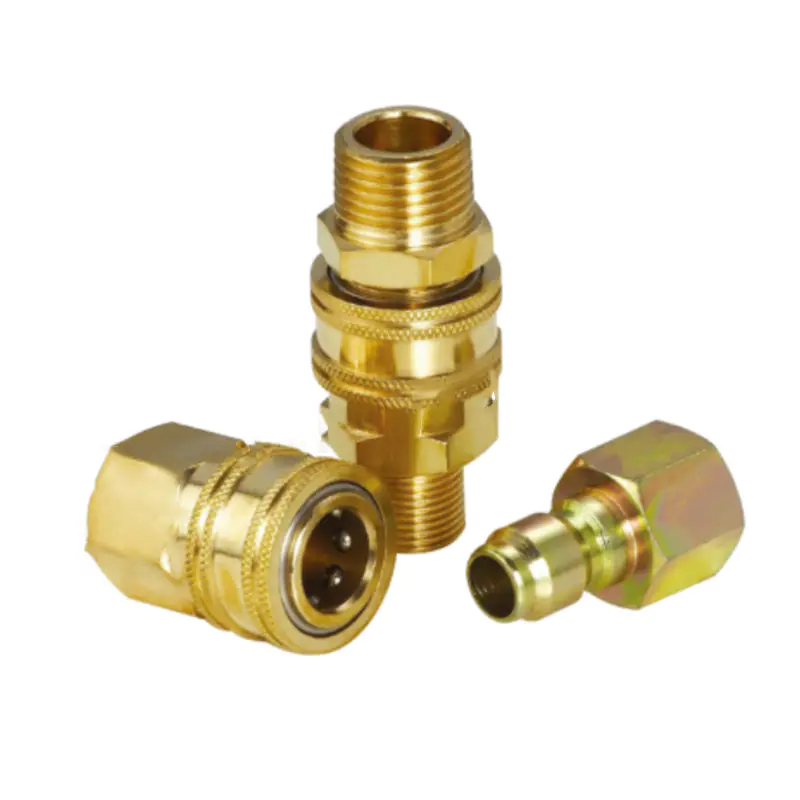
How does the internal design of a hydraulic quick coupling affect pressure drop, flow turbulence, and overall system efficiency?
28
Mar
Mar
