
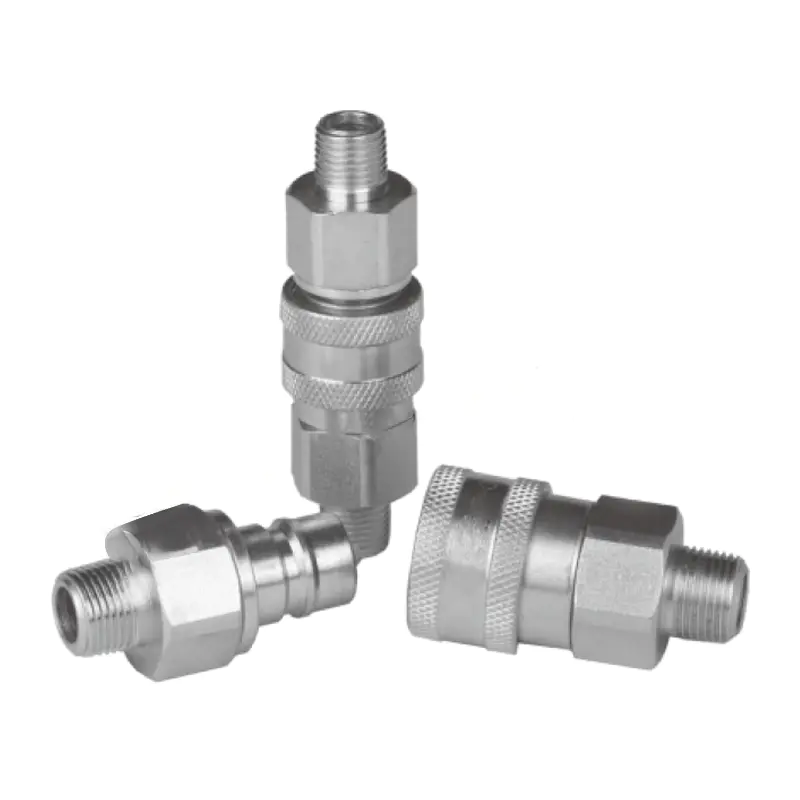
1. Internal Diameter and Flow Capacity
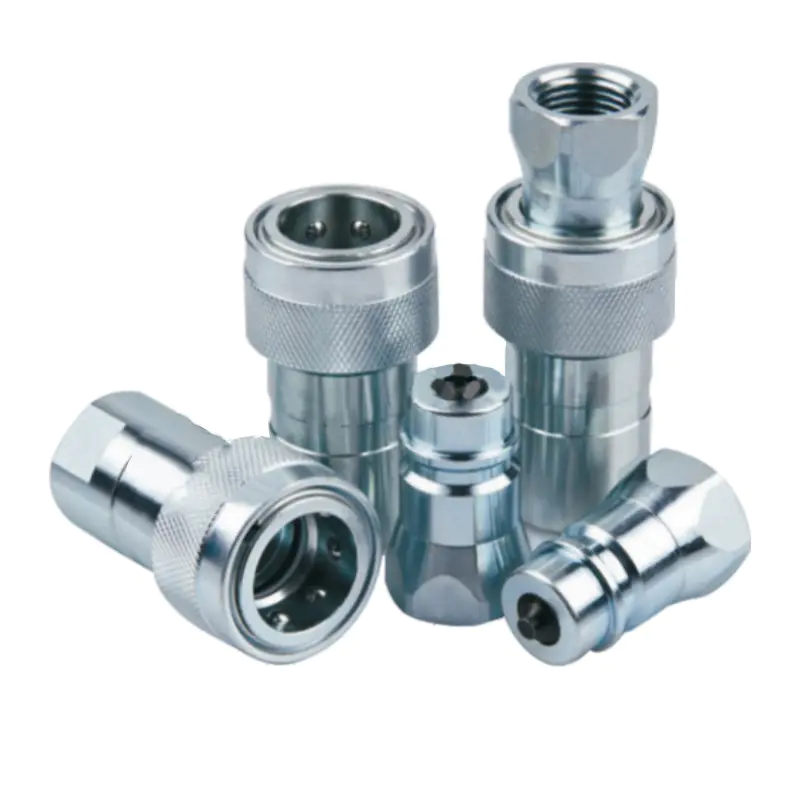
The internal diameter of a Hydraulic Quick Coupling is one of the most critical factors affecting flow efficiency. Larger diameters allow a higher volumetric flow rate with minimal resistance, ensuring that hydraulic fluid can pass through the coupling with low pressure drop. This is particularly important in systems requiring high flow rates, such as industrial machinery or mobile hydraulics, where inadequate flow can slow actuator response and reduce operational efficiency. Smaller diameters increase fluid velocity for the same flow rate, generating turbulence and frictional losses, which lead to localized heating and energy waste. Engineers must carefully select coupling sizes that match the intended flow capacity to maintain consistent system performance and prevent overloading pumps or causing pressure instability.
2. Fluid Path Geometry and Design
The geometry of the fluid path within a coupling significantly influences hydraulic efficiency. Straight-through designs with smooth internal surfaces allow fluid to flow with minimal resistance and turbulence, maintaining laminar flow and consistent pressure delivery. Couplings with sharp bends, abrupt diameter changes, or recessed valve chambers can create eddies and flow separation, resulting in pressure drops, increased turbulence, and reduced volumetric efficiency. Optimized internal pathways not only reduce energy loss but also improve the stability of hydraulic actuation, ensuring precise movement of cylinders, motors, or other hydraulic components. Advanced coupling designs may include streamlined chamfers or tapered passages to minimize flow disruption.
3. Valve Mechanisms and Shutoff Features
Hydraulic quick couplings frequently incorporate internal check valves or automatic shutoff mechanisms to prevent fluid loss when disconnected. While these features are essential for safety, cleanliness, and system integrity, they can introduce additional flow resistance if poorly designed. High-quality couplings employ low-resistance valve designs that maintain near-straight-through flow characteristics when engaged, minimizing pressure drop and flow restriction. Poorly designed valves can throttle flow, reduce actuator speed, and create heat in high-flow or high-pressure applications. Proper valve selection and integration are therefore crucial to ensure that safety features do not compromise overall system efficiency.
4. Seals, Tolerances, and Surface Finish
The seal design, internal tolerances, and surface finish of a Hydraulic Quick Coupling directly affect flow characteristics. Seals must prevent leakage while minimizing obstruction to the hydraulic fluid. Tight or misaligned seals, rough mating surfaces, or uneven internal machining can generate localized turbulence, cavitation, or pressure spikes, reducing volumetric efficiency and potentially damaging downstream components. Modern couplings use precisely engineered seals and polished flow paths to ensure low-friction, leak-free operation while preserving flow efficiency. Maintaining these tolerances is critical in high-pressure applications, where even minor restrictions can significantly affect system dynamics.
5. Impact on Pressure Drop and Hydraulic System Dynamics
Coupling size and design directly influence pressure drop across the connection point, which can affect the performance of the entire hydraulic circuit. Excessive pressure drops reduce the force and speed delivered to actuators, cause uneven system response, and increase load on pumps, potentially accelerating wear. Well-designed couplings minimize pressure loss by combining optimized internal diameter, smooth fluid paths, and efficient valve placement. This ensures consistent fluid delivery, precise control of actuators, and stable operation under varying load conditions. In complex systems with multiple couplings, each additional connection can contribute to cumulative pressure loss, emphasizing the importance of optimal design.
