
How the High Pressure Ball Valve Handles Pressure Surges and Water Hammer
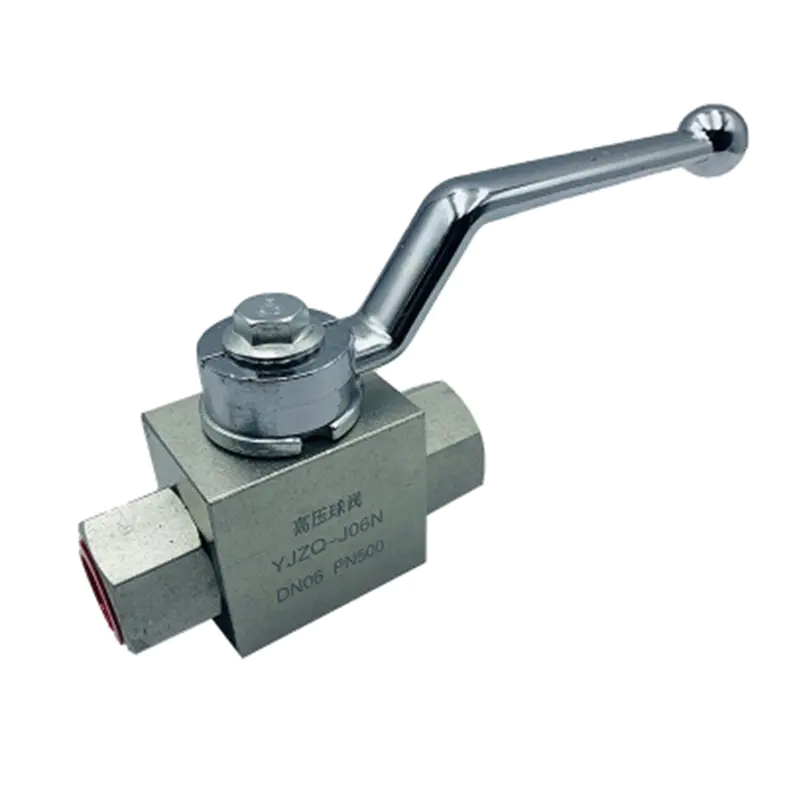
The High Pressure Ball Valve handles pressure surges and water hammer conditions primarily through its robust structural design, tight sealing mechanism, and rapid shut-off capability. These valves are engineered to withstand sudden spikes in pressure—often exceeding normal operating pressure by 1.5 to 3 times—without deformation or leakage. Their full-bore or reduced-bore configurations, combined with high-strength materials and reinforced seats, allow them to absorb transient hydraulic shocks effectively while maintaining system integrity.
In practical pipeline systems, the High Pressure Ball Valve minimizes the impact of water hammer by enabling quick closure, reducing fluid momentum, and maintaining a secure seal even under dynamic pressure fluctuations. This makes it highly suitable for applications such as oil and gas transmission, chemical processing, and high-pressure hydraulic systems.
Understanding Pressure Surges and Water Hammer
Pressure surges occur when a fluid in motion is forced to stop or change direction suddenly, creating a shock wave throughout the pipeline. Water hammer is a specific type of surge typically caused by rapid valve closure or pump failure. The resulting pressure spikes can reach several hundred psi above normal operating levels, depending on flow velocity and pipeline length.
These transient conditions can lead to:
- Pipe vibration and structural fatigue
- Seal failure in valves and joints
- Noise and mechanical stress
- Potential system failure in extreme cases
The High Pressure Ball Valve is specifically designed to mitigate these risks through structural resilience and controlled operation.
Design Features That Absorb Pressure Surges
Several engineering features enable the High Pressure Ball Valve to withstand and manage sudden pressure changes effectively:
Robust Body Construction
High pressure ball valves are typically constructed from forged steel, stainless steel, or alloy materials. These materials provide tensile strengths exceeding 500 MPa, ensuring the valve body does not deform under transient loads.
Floating or Trunnion-Mounted Ball
In high-pressure applications, trunnion-mounted designs are commonly used. These designs reduce friction and stabilize the ball, preventing displacement during pressure surges. This helps maintain consistent sealing even under extreme pressure differentials.
Resilient Seat Materials
Seats made from materials such as PTFE, reinforced PTFE, or PEEK provide elasticity and durability. These materials can compress slightly under pressure surges, absorbing shock and maintaining a tight seal.
Pressure Equalization Design
Many High Pressure Ball Valves include pressure relief ports or cavity pressure relief systems that prevent trapped fluid from amplifying pressure within the valve body. This helps avoid internal over-pressurization during thermal expansion or sudden flow changes.
Operational Response to Water Hammer
The High Pressure Ball Valve responds to water hammer conditions through its ability to open and close quickly while maintaining structural integrity. However, controlled operation is essential to minimize shock intensity.
Key operational behaviors include:
- Rapid shut-off reduces the duration of reverse flow but must be balanced to avoid sudden deceleration of fluid
- Gradual actuation (where possible) helps reduce pressure wave magnitude
- Use of actuators with controlled closing speeds can significantly reduce water hammer effects
For example, in a pipeline with fluid velocity of 2 m/s, sudden valve closure can generate pressure surges exceeding 200–300 psi. By adjusting closure time from instantaneous to several seconds, the magnitude of the surge can be substantially reduced.
Comparison of Mitigation Approaches
Different design and operational strategies can be used alongside the High Pressure Ball Valve to mitigate pressure surges. The table below summarizes common approaches:
| Method | Effectiveness | Application |
|---|---|---|
| Controlled valve actuation | High | Automated systems |
| Surge tanks | Very High | Long pipelines |
| Pressure relief valves | Medium | Critical safety lines |
| High Pressure Ball Valve design | High | General high-pressure systems |
Practical Considerations for Users
When selecting and operating a High Pressure Ball Valve in environments prone to pressure surges, users should consider several practical factors:
- Ensure the valve is rated for at least 1.5 times the maximum system pressure
- Choose trunnion-mounted designs for large-diameter, high-pressure pipelines
- Use actuators with adjustable closing speeds to reduce shock
- Incorporate surge protection devices such as dampeners or accumulators
- Regularly inspect seals and seats for wear caused by repeated pressure fluctuations
By combining proper valve selection with system-level surge mitigation strategies, the risk of damage from water hammer can be significantly reduced.
The High Pressure Ball Valve effectively handles pressure surges and water hammer conditions through a combination of durable materials, precision engineering, and controlled operation. Its ability to maintain sealing integrity under rapid pressure fluctuations makes it a reliable component in high-pressure pipeline systems. While the valve itself provides strong resistance to transient events, optimal performance is achieved when it is integrated with proper system design, controlled actuation, and supplementary surge mitigation devices. Ultimately, the High Pressure Ball Valve plays a critical role in ensuring operational safety, stability, and longevity in demanding fluid control environments.
